
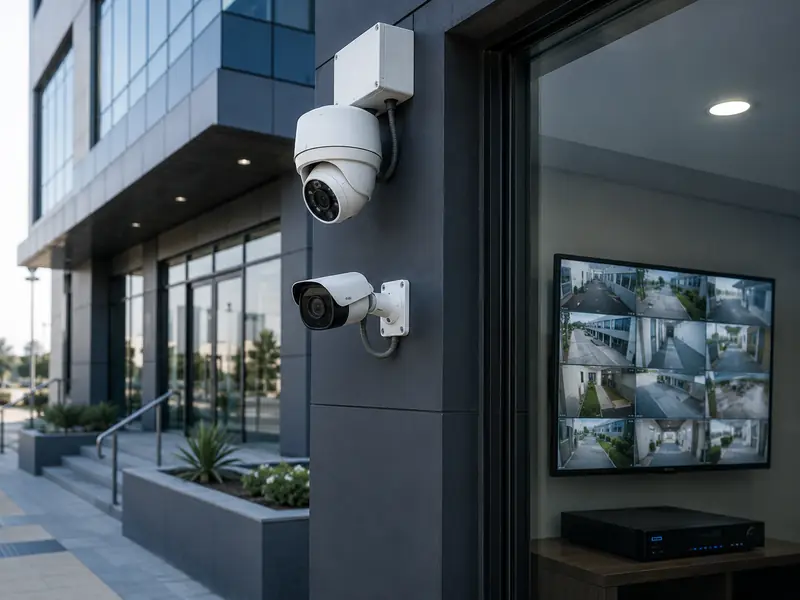
Start with the scene, not the device sheet
A CCTV decision should not begin with “how many megapixels?” First decide what must be visible, at what distance and under which lighting. A wide camera may cover an area without identifying a face, while high resolution cannot repair a poor mounting angle.
IP or HD? A practical comparison
| Factor | IP cameras | HD cameras |
|---|---|---|
| Infrastructure | Usually network and PoE based | Coaxial video with separate power |
| Expansion | Flexible for new and multi-site designs | Practical when reusing existing cabling |
| Typical fit | New networks and broader integration | Cost-conscious upgrades to a current system |
Neither technology is universally better. Existing cabling, distance, network readiness and future expansion determine the sensible choice.
Four decisions that shape system quality
Use wide views for awareness and tighter angles when detail at distance matters.
Review lighting, distance and reflections—not only the night-vision label.
Connect camera count, resolution, frame rate and compression to retention days.
Use named users, appropriate permissions and secure remote viewing.
How should storage be estimated?
Capacity changes with camera count, resolution, frame rate, compression, continuous or motion recording, and retention days. Choosing a drive from camera count alone is unreliable.
- Set the required retention period before selecting the recorder.
- Allow headroom for changes in activity and recording settings.
- Verify the oldest available footage after the system is operating.
Common mistakes that cost more later
Useful detail also depends on lens, distance and lighting.
Place cameras around real movement paths, not building symmetry.
Separate users make access safer and easier to revoke.
Test search, playback, time, alerts and remote access before handover.
Checklist before approving a proposal
- A camera-point plan with a clear purpose for each view.
- Camera, lens and outdoor-protection specifications.
- Recorder capacity and expected retention period.
- Cabling, power, network and installation scope.
- Mobile viewing, user accounts, testing and warranty.
Continue your research
Need to turn requirements into a clear plan?
Send the site type, approximate size and important entrances. We will explain what should be surveyed before equipment is selected.